 English
 Español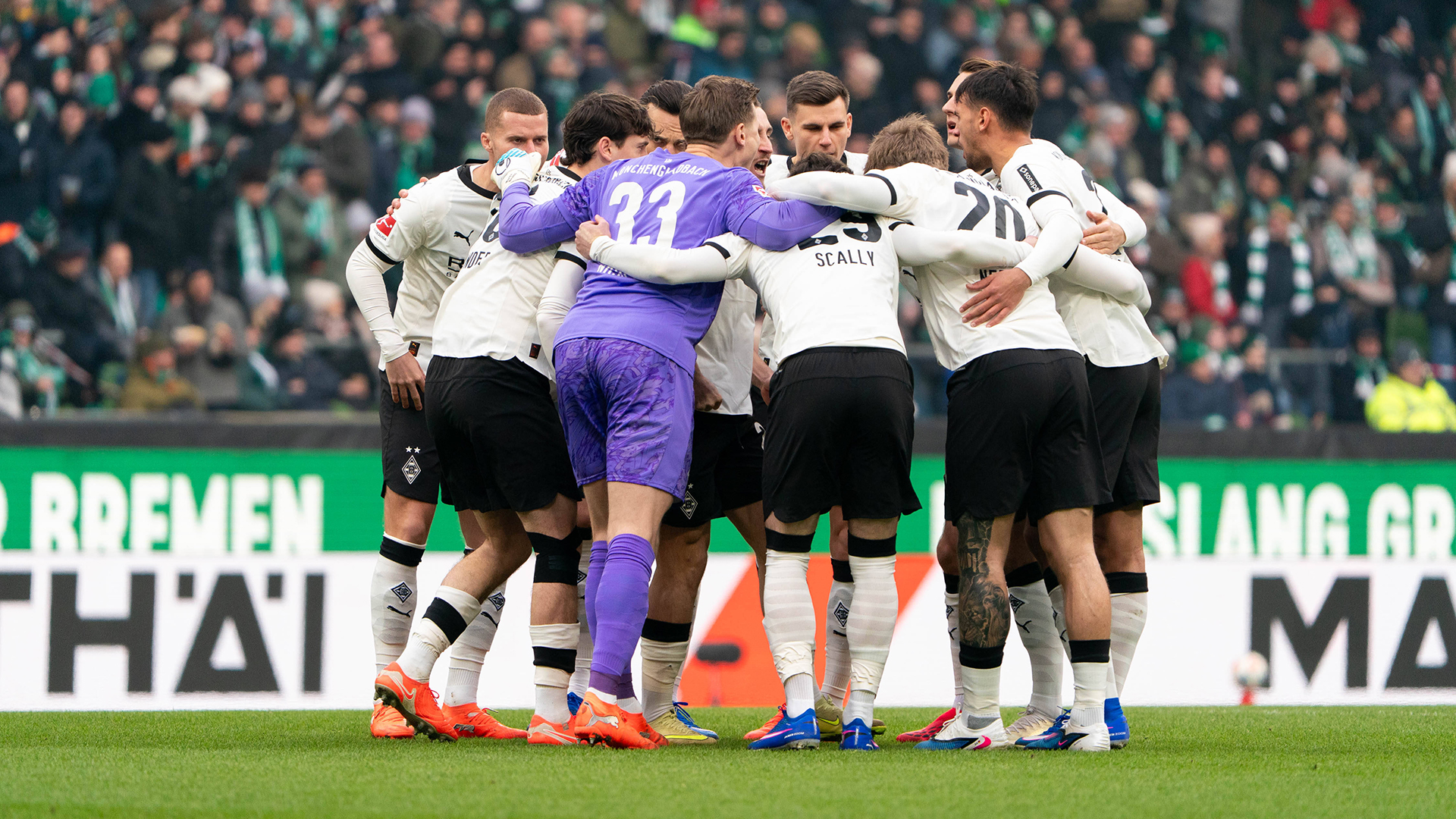
Kevin Diks appeared visibly relieved in front of the microphone after the 1-0 win against Union Berlin on Saturday. As if someone had lifted a weight off his shoulders, the 29-year-old spoke about such an “important victory” for his Borussia team, which he clinched with a penalty in the 94th minute. Not surprising, as the result was desperately needed after seven games without a win. “The last four weeks have been tough,” said the defender. “There was a lot of pressure after the poor results.”
After a disappointing start to the campaign and the initial lack of a bounce from the change of coach, the Rhinelanders had actually started to build up some momentum at the end of the year. However, the recent heavy losses at Hoffenheim (5-1), at home to Stuttgart (3-0) and at Eintracht Frankfurt (3-0) were more reality checks than slip-ups. And so, with 10 matchdays of the season left, Eugen Polanski’s side remain stuck in mid-table obscurity, although the recent winless run has had the Foals looking over their shoulders again. The three points against Union therefore came at exactly the right moment, especially as FC Bayern are up next on Friday (20:30 CET) – ready to dampen that slight upswing.
“We can’t rest after this win, though, we have to keep working hard,” continued Diks, knowing full well that success in professional football tends to be measured in days rather than weeks. “This performance and this win mustn’t remain a one-off. This is how we want to perform again next week,” declared the Indonesia international. It’s clear that Bayern face opponents who want to build on the newly acquired momentum with intensity and consistency. That aside, however, the so-called “grey mouse” of the league is difficult to pin down – sometimes compact and composed, sometimes erratic and unpredictable. A look at the numbers brings this changeable profile into sharper focus.
Dangerous from set pieces – but lacking force from open play
Currently in 12th place in the table, Gladbach are living up to their image of mid-table mediocrity: solid but rarely spectacular. The Foals are underperforming offensively, as evidenced by their 27 goals scored, which fall short of both the modeled expected goals value and the league average. One reason for that is the efforts of Franck Honorat, Haris Tabaković and Co in attack too often come to nothing. Borussia are among the sides who have scored the fewest goals from open play this season. There have been signs of progress in recent weeks, however: Gladbach got themselves into finishing positions 21 times in the match against Union. “I’m glad the team also showed their creative side, without neglecting the battling qualities,” commented Polanski after full time. Midfielder Philipp Sander also emphasised: “We were the team who tried to make things happen more during the game.”
Despite that, dead balls remain crucial to Borussia’s attacking plan. The fact that over a third of their goals have from set pieces is a clear indicator that they’re still lacking a cutting edge in open play. The Foals have only really been successful in the danger zone – they’re yet to score from outside the box this season. That’s a clear sign that Gladbach focus on getting in front of goal in the penalty area, but also reveals the lack of threat from distance.
Cautious rather than ruthless: Gladbach’s pressing and counter profile
The North Rhine-Westphalia outfit rarely make an impact from their own pressing: Gladbach have only scored after their opponents have lost the ball four times, the lowest figure in the Bundesliga. This indicates that Polanski's side tend to adopt a wait-and-see approach in the initial phase of counter-pressing or generate too few quick, precise follow-up actions after winning the ball. The Foals are similarly cautious in their transition play, with just two goals on the counterattack – again more rarely than any other Bundesliga club. On the flip side, their defensive cover against counters is solid, with Gladbach conceding only one goal from a counter – the best record in the league.
Polanski’s plan: Flexible system, firm spine
Polanski has been experimental in his team selection lately, varying his formation several times and switching between three and four at the back. Diks and Nico Elvdei are the pillars of the defence. In the defeat at Frankfurt and the 1-1 draw against Leverkusen the week before, the Gladbach boss deployed Yannik Engelhardt as the clear holding midfielder in front of the defence, with Kevin Stöger and Rocco Reitz as more attack-minded central midfielders tasked with driving the play into the final third. Jens Castrop (right) and Lukas Ullrich (left) normally defend the flanks. Up front, Honorat (top provider with five assists) and Tabaković (top scorer with 11 goals) are the Foals’ most trusty weapons, and the duo are almost certain to start again in Munich.
So, Borussia Mönchengladbach won’t travel to the Allianz Arena on Friday as rank outsiders without a plan, but as a team whose strengths and weaknesses lie close together: reliability on set pieces and their front two in attack, steady at the back if the shape is right, but vulnerable if the other team keep up the tempo and the precision. That presents Bayern with the chance to quickly nip Gladbach’s upturn in the bud – provided the Munich men bring their own quality onto the pitch.