MILAN — Figure skating has been an Olympic event for longer than there have been Winter Olympics. It’s true: men’s, women’s and pairs skating events were held at the 1908 Summer Olympics; the Winter Games didn’t make their debut until 1924 in Chamonix, France. Even ice dancing now has a 50-year pedigree, beginning in 1976 in Innsbruck.
Team skating, by contrast, is virtually brand new, dating only back to Sochi in 2014. National teams, only in the fourth iteration of team competition, are still figuring out exactly how to set up their rosters to maximize the potential for both team and individual success.
Because here’s the not-so-secret truth of the team skate: It can have a significant effect on an athlete’s individual performance. Because the team event starts the Olympics, and because the Olympics take place in such a tight time frame, the physical and emotional cost of the team event can ripple right on through into individual ones, affecting and potentially upending individual dreams.
This year at Milan, team skating began even before the Opening Ceremony, lasting until Sunday, Feb. 8. The very next day, ice dancers began their short program, and on Tuesday, the men’s skate began. Given that the United States ran out the same athletes in both of those team segments — ice dancers Madison Chock and Evan Bates, and men’s skater Ilia Malinin — it’s fair to wonder just how much of an effect the quick turnaround might have had.
“We had a little bit more time than our other teammates did,” said pairs dancer Ellie Kam, who with partner Danny O’Shea skated both team events, but had a full week to recover. (The women have nine days between skates.) “I can't imagine having to do back-to-back programs the next day. … Keeping your head focused for that period of time is definitely really hard. So I don't envy that at all.”
“We trained specifically for it. We knew that it was coming,” O’Shea said. “We've done back-to-back competitions in the past. … Two years ago, we finished nationals (in Ohio) and got on a plane to fly to Shanghai (for Four Continents) … and we medaled at that Four Continents.”
While not blaming the schedule for their silver medal finish, Chock did point out the workload that she and Bates had endured early in the Games. “We just performed four times in six days at the Olympics," Bates said last week. "We have never done anything like it. It took so much mental strength and discipline to stay focused over the last six days and to deliver four great performances.”
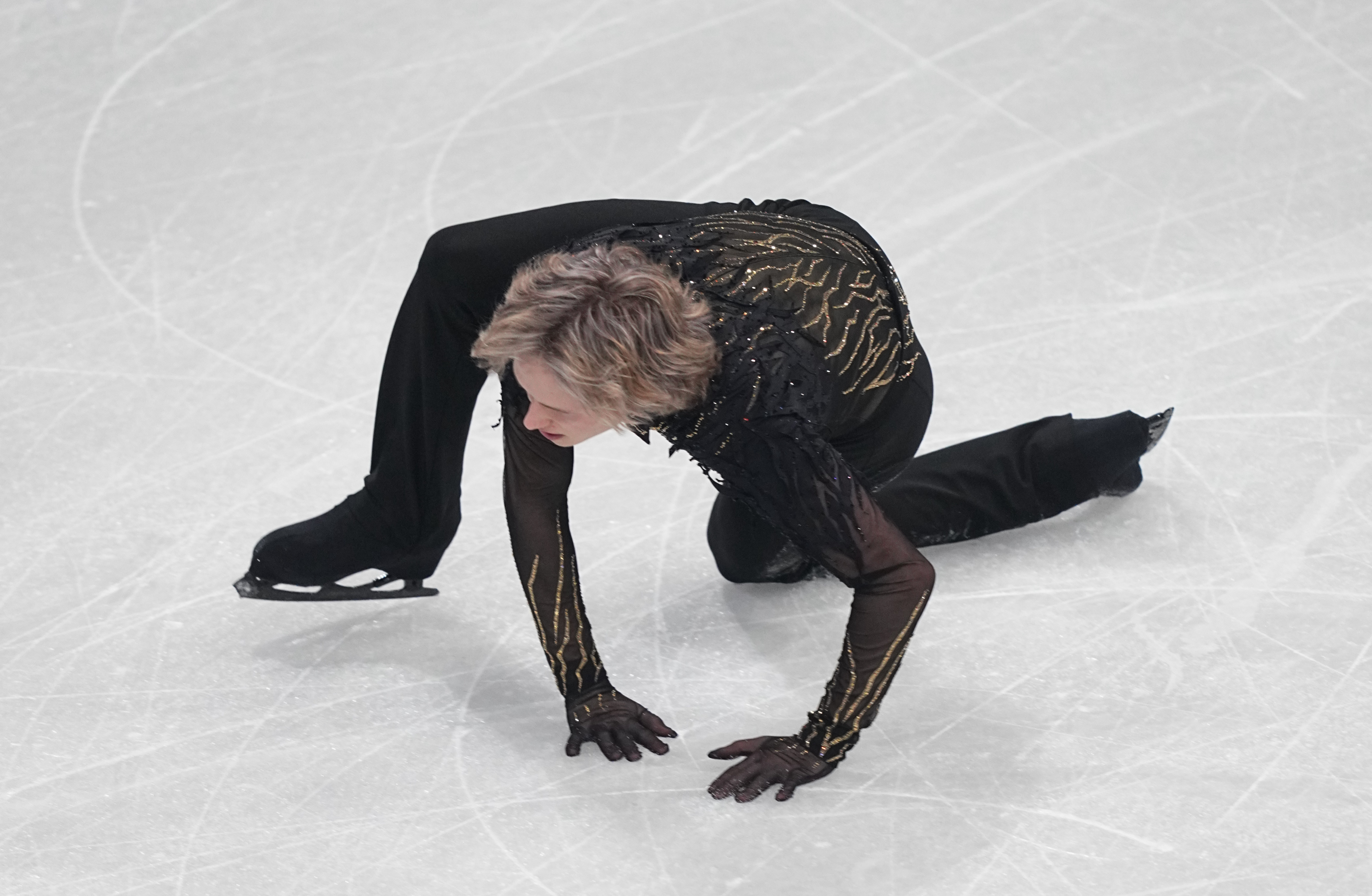
Ilia Malinin, who dramatically rallied the United States to victory in the team event but collapsed in his own individual event, didn’t blame the schedule for his woes. But it’s worth noting that he probably wouldn’t have skated the second team free skate had the United States held more of a points advantage. That may or may not have hurt his mental state heading into his own free skate, where he imploded on ice, but it surely took a toll on his physical one.
The team event obviously isn’t going anywhere, but could the schedule change? A reversal, perhaps, with the individual events coming first?
“We would definitely prefer to have the individual events first and then the team event later on,” O’Shea said earlier in the week. “That would really allow the athletes to get into the celebratory feel that a team event has and really let loose a little bit more in watching the other athletes and being able to participate in cheering on your team.”
Other skaters held slightly different views. “In my opinion, I think that having a team event first and then an individual event is better,” Japan’s Masaya Morita said through an interpreter. “The motivation of the Japanese team has increased.”
“I'm happy to have this opportunity (to team skate first),” Italy’s Sara Conti said through an interpreter. “I don't want to call it training because it's not training, but I don't even feel the pressure. … The spirit of the team has helped me a lot in terms of tension.”
Figure skating is such a massive Olympic viewership magnet that you could make an argument either way for the team positioning — placing the team event first introduces everyone to the skaters who then go on to face their individual battles; starting out with individual skaters allows for an Avengers-style getting-the-team-together climactic finish to the Games.
Either way, the International Skating Union is keeping its cards close to its vest. An ISU spokesperson provided the following statement to Yahoo Sports on the question of schedule changes:
"Following established processes, the ISU will review competition schedules for future editions of the Olympic Winter Games in coordination with the IOC and the respective Organizing Committees in due course ahead of the next Olympic Winter Games edition.”
So there you go. Future Olympic skaters better prepare for the back-to-back, just in case.